
Find the Right School for You

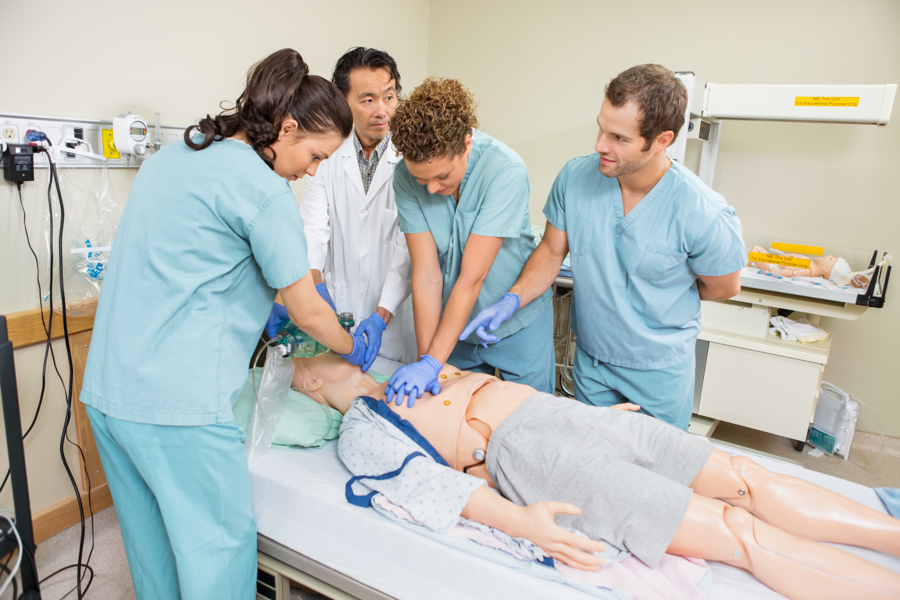
As a licensed practical nurse, you’ll be at the forefront of patient care, working closely with registered nurses and physicians to ensure the well-being and comfort of your patients, making a tangible impact on their lives every day.
LPN programs provide students with the essential knowledge and hands-on skills needed to excel as Licensed Practical Nurses. These comprehensive training programs cover a wide range of topics, from basic nursing care and patient assessment to pharmacology and medical-surgical nursing. By mastering these subject areas, students are well-prepared to pass the NCLEX-PN certification exam and begin their careers as compassionate and competent healthcare professionals.
Throughout the program, LPN students prepare for the NCLEX-PN certification exam. Coursework emphasizes critical thinking, problem-solving, and test-taking strategies. Many programs offer dedicated NCLEX review sessions and practice exams to boost students’ confidence and readiness for the licensure exam.
While there are no 100% online LPN programs due to the hands-on nature of nursing education, many schools offer hybrid LPN programs that combine online coursework with in-person clinical training. These programs allow aspiring LPNs to complete theoretical components online while still gaining essential hands-on experience through supervised clinical rotations at healthcare facilities.
LPN programs are offered by various occupational education providers at the vocational-technical and community college level. See our list of state pages below to find additional information about programs near you.
The fastest way to become an LPN is through accelerated or bridge programs that leverage prior healthcare experience to streamline training. For those already working as certified nursing assistants, CNA to LPN bridge programs can allow completion in as little as one or two semesters by applying existing skills. Aspiring LPNs without prior experience can seek out accelerated LPN programs, which offer intensive training to enable graduation in 6-12 months, faster than traditional routes.
Some employers also provide abbreviated LPN training for CNA employees, offering another rapid pathway. However, these accelerated options are rigorous and require full-time commitment to condensed training.
LPN programs are indeed challenging due to their intensive and fast-paced nature. Students must learn a large amount of complex nursing theory and practical skills in a condensed timeframe, typically 12-18 months. Balancing demanding coursework with clinical rotations requires strong time management and dedication. The curriculum covers topics like anatomy, pharmacology, nursing fundamentals, and specialties in significant depth. Rigorous testing and skills assessments add to the program’s difficulty.
The main differences between licensed practical nurses (LPNs) and registered nurses (RNs) lie in their educational requirements, scope of practice, and level of autonomy. LPNs typically complete a one-year certificate program, while RNs must earn at least a two-year associate’s degree or a four-year bachelor’s degree in nursing.
RNs have a broader scope of practice, allowing them to perform more complex clinical tasks, develop nursing care plans, and supervise LPNs and other healthcare staff. In contrast, LPNs work under the direction of RNs, focusing on basic bedside care, taking vital signs, administering medications, and reporting changes in patients’ conditions.
Read More