

Find the Right School for You

Our Promise
We are dedicated to providing high-quality, trustworthy content. Our team of writers, editors, and experts rigorously researches and reviews all material to ensure accuracy and relevance. See our editorial policy.
Summary
Nurse educators are vital to the advancement of healthcare, combining clinical expertise with a passion for teaching to train the next generation of nursing professionals. They work in academic and clinical settings, designing curricula, delivering lectures, supervising clinical training, and mentoring students. With roles that bridge nursing theory and practical application, nurse educators play a pivotal role in improving healthcare outcomes.
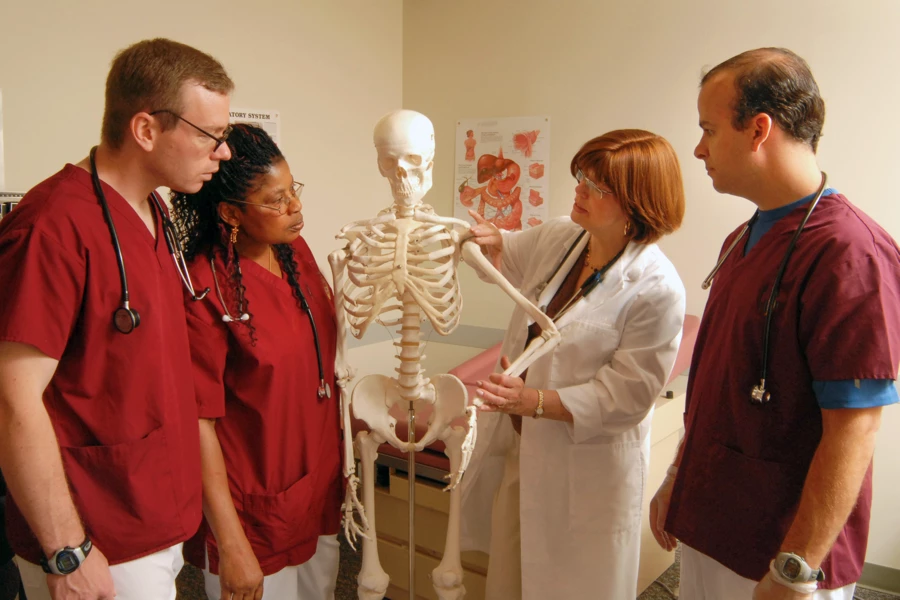
A nurse educator is a licensed, experienced nurse who has transitioned into the realm of education, tasked with instructing and mentoring the next generation of nursing professionals. These individuals possess a deep understanding of nursing theory and clinical practice, coupled with the ability to effectively communicate complex concepts to students.
The role of a nurse educator extends beyond mere instruction; they serve as role models, mentors, and guides for their students. By embodying the highest standards of nursing practice and professionalism, nurse educators inspire their pupils to strive for excellence in their future careers.
Offering personalized academic and career guidance to help students navigate their educational journey and professional aspirations. This mentorship often extends beyond graduation, fostering long-lasting professional relationships.
To start your journey to becoming a nurse educator, you need to obtain a Bachelor of Science in Nursing (BSN). This degree is the minimum educational requirement for most advanced nursing roles and is necessary to pursue further education. During your BSN program, you’ll develop a solid foundation in patient care, healthcare ethics, and nursing leadership.
After completing your BSN, you must become a licensed registered nurse (RN) by passing the National Council Licensure Examination (NCLEX-RN). Licensure allows you to practice as a nurse, giving you the opportunity to gain crucial hands-on experience. It is essential to work in a clinical setting for several years to develop practical skills in patient care, medical procedures, and interdisciplinary collaboration. This experience will not only help you build confidence but also provide you with real-world insights that are critical when teaching and mentoring nursing students.
To become a nurse educator, you will need a Master of Science in Nursing (MSN), ideally with a focus on nursing education. An MSN program will provide you with advanced knowledge in nursing practice, curriculum development, and instructional methods. Some universities even offer specialized Nurse Educator tracks, which are specifically designed to prepare you for an academic or clinical teaching role. Additionally, some MSN programs may include teaching practicums, which can provide valuable hands-on experience in an academic setting.
While a master’s degree is often sufficient, a Doctor of Nursing Practice (DNP) or a PhD in Nursing can enhance your qualifications, especially if you wish to work at a university level or conduct research. A DNP focuses on advanced clinical practice, while a PhD is more research-oriented. A doctoral degree can open doors to leadership positions in academic settings and increase your opportunities for career advancement.
Although not always required, obtaining a Certified Nurse Educator (CNE) credential can set you apart from other candidates and demonstrate your commitment to excellence in nursing education. The CNE certification, offered by the National League for Nursing (NLN), requires an MSN and at least two years of teaching experience. Certification can also help you stay updated on best practices in nursing education.
The demand for nurse educators is on the rise, driven by a growing need for skilled nursing professionals. Faculty shortages at nursing schools across the country are limiting student capacity at a time when the need for professional registered nurses continues to grow. Budget constraints, an aging faculty, and increasing job competition from clinical sites have contributed to this crisis. This increased demand may lead to enhanced compensation packages and more opportunities for nurse educators in diverse healthcare and academic settings.
Read More