
Licensed Practical Nurse

Find the Right School for You


Licensed Practical Nurse

Begin your path to a meaningful career as an LPN. Explore the steps to becoming a Licensed Practical Nurse and make a real difference.
Licensed Practical Nurse
Joanna Whitfield, MSN, RN | July 31, 2024
Medically reviewed by EveryNurse Staff Writers
Licensed Practical Nurse
Summary
LPNs are essential healthcare professionals who provide hands-on patient care, working closely with RNs and physicians to ensure the well-being of their patients. With a relatively short training period of 12-18 months, you can quickly transition into a fulfilling role that offers job stability, competitive salaries, and numerous opportunities for advancement.

What Is an LPN?

A Licensed Practical Nurse (LPN), also known as a Licensed Vocational Nurse (LVN) in some states, is a healthcare professional who provides basic medical care under the supervision of Registered Nurses (RNs) and doctors. LPNs perform essential tasks such as taking vital signs, administering medications, changing wound dressings, and assisting patients with daily activities like bathing and feeding. They serve as a critical link between patients, their families, and the broader healthcare team, ensuring clear communication and continuity of care.

What Does an LPN Do?

LPNs work in various healthcare settings, including hospitals, nursing homes, assisted living facilities, rehabilitation centers, and home healthcare. They are responsible for various hands-on tasks that ensure the well-being and comfort of patients. Below is a list of key responsibilities that LPNs typically handle in their daily work:

Key Responsibilities

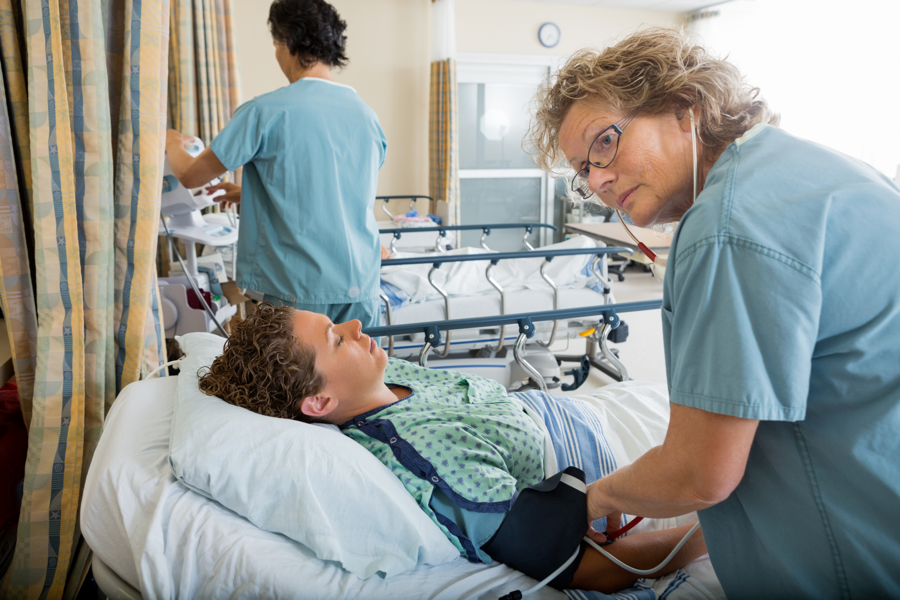
  • Regularly check and record patients’ vital signs, such as blood pressure, temperature, pulse, and respiration rates, and report any changes to RNs or doctors.
  • Administer prescribed medications and injections, ensuring correct dosages and timing, and assist in managing intravenous (IV) therapy as allowed by state regulations.
  • Assist patients with daily activities such as bathing, dressing, grooming, eating, and mobility, as well as maintaining hygiene and comfort, especially for those with limited mobility.
  • Perform wound care by changing bandages, cleaning wounds, and inserting or removing catheters, ensuring procedures are done safely to prevent infections.
  • Support RNs and doctors during medical procedures by preparing equipment, positioning patients, and providing necessary assistance throughout the process.
  • Accurately record patients’ health information, treatment plans, and any changes in condition in medical records to ensure clear communication among the healthcare team.
  • Provide patients and their families with information about care plans, medications, and post-treatment care, educating them on managing health conditions and promoting healthy lifestyle choices.
  • Offer emotional support to patients and their families, helping them cope with illness, injury, or the stress of hospitalization through compassionate care and effective communication.
  • Follow infection control protocols and maintain a hygienic environment to ensure patient rooms and healthcare facilities are clean, organized, and safe.
  • Work closely with RNs, doctors, and other healthcare professionals to develop and implement patient care plans, participate in team meetings, and contribute to the overall coordination of patient care.

How to Become an LPN

Becoming an Licensed Practical Nurse offers a rewarding and relatively quick pathway into the nursing profession. The process to become an LPN involves specific educational and licensing steps, which can typically be completed within one to two years. Below are the key steps to becoming a Licensed Practical Nurse:

1. Earn a High School Diploma or GED

To begin your journey to becoming an LPN, you must first have a high school diploma or GED. This foundational education is necessary to enroll in an accredited LPN training program. Traditional high school students typically complete their classes in four years, while earning a GED involves passing a four-part equivalency test, which can take about three months to prepare for, depending on individual readiness.

2. Complete an Accredited LPN Training Program

Enroll in a state-approved LPN training program, which is typically offered at community colleges, vocational schools, and technical institutes. These programs usually take 12-18 months to complete and include both classroom instruction and hands-on clinical experience. The curriculum covers essential topics such as basic nursing skills, anatomy, physiology, pharmacology, and patient care.

3. Pass the NCLEX-PN Exam

After completing your LPN training program, you must pass the National Council Licensure Examination for Practical Nurses (NCLEX-PN) to obtain your nursing license. This exam assesses your knowledge and skills to ensure you are prepared to provide safe and effective patient care. The NCLEX-PN is a computer adaptive test (CAT) ranging from 85 to 205 questions, including multiple-choice questions and practical scenarios. The test adapts to your ability level, presenting questions that vary in difficulty based on your previous answers.

4. Apply for State Licensure

Once you pass the NCLEX-PN, you need to apply for licensure in the state where you plan to practice. Each state has its own licensing requirements, so be sure to check with your state’s nursing board for specific details. The application process typically includes submitting proof of education, exam results, and a background check. You may also need to pay a licensing fee and provide fingerprints for a criminal background check. Completing these steps ensures that you meet all the necessary criteria to legally work as an LPN in your chosen state.

5. Find Employment as an LPN

With your license in hand, you can begin searching for employment as an LPN. LPNs work in various healthcare settings, including hospitals, nursing homes, long-term care facilities, clinics, and home healthcare. Utilize job boards, networking, and staffing agencies to find job opportunities that match your skills and interests.

6. Consider Specialization and Certification

While not required, obtaining specialized certifications can enhance your career prospects and earning potential. LPNs can pursue certifications in areas such as IV therapy, gerontology, or hospice care. These certifications demonstrate expertise in specific areas of patient care and can open doors to advanced job opportunities.

7. Pursue Continuing Education

To maintain your LPN license, you will need to complete continuing education requirements as mandated by your state. Continuing education helps you stay current with the latest nursing practices and advances in healthcare. It also provides opportunities for professional growth and development.

Licensed Practical Nurse vs. Registered Nurse

If you are unfamiliar with the key differences between an LPN and an RN, it can be difficult to distinguish between them. Licensed practical nurses and registered nurses frequently work together, and their daily duties often overlap, so it is easy to mistake one for the other. A summary of the differences between the professions is provided below.

Education and Training

Licensed Practical Nurses (LPNs) typically complete a state-approved training program that lasts about 12-18 months, often resulting in a diploma or certificate. In contrast, Registered Nurses (RNs) must earn an Associate Degree in Nursing (ADN) or a Bachelor of Science in Nursing (BSN), which takes 2-4 years to complete. The more extensive education for RNs includes advanced coursework in nursing theory, clinical practice, and specialized areas of care.

Scope of Practice

LPNs provide basic medical care under the supervision of RNs or physicians, including tasks like monitoring vital signs, administering medications, and assisting with daily activities. RNs have a broader scope of practice that includes performing diagnostic tests, developing patient care plans, administering advanced medical treatments, and educating patients and their families. RNs can also specialize in specific areas such as critical care, pediatrics, and oncology.

Responsibilities

While both LPNs and RNs perform essential nursing duties, RNs have greater responsibilities due to their advanced training. LPNs focus on routine patient care and support tasks, whereas RNs are responsible for comprehensive patient assessments, creating and implementing care plans, and making critical decisions about patient care. RNs also often take on leadership roles within healthcare teams.

Autonomy and Decision-Making

LPNs generally work under the direction of RNs and physicians, following established care plans and protocols. RNs, however, have more autonomy and are authorized to make independent decisions regarding patient care. They are often involved in diagnosing conditions, initiating treatment plans, and coordinating complex care.

Work Settings

Both LPNs and RNs can work in various healthcare settings, including hospitals, nursing homes, clinics, and home health care. However, RNs are more likely to work in specialized units such as intensive care, emergency departments, and surgical wards. They also have opportunities in community health, education, and administrative roles.

LPN Salary & Wages

The average salary for a Licensed Practical Nurse (LPN) in the United States is approximately $60,790 per year, or $29.23 per hour, though this can vary based on location, experience, and the type of healthcare facility. For instance, LPNs in states like California and Alaska tend to earn higher salaries compared to those in other regions, making $76,580 and $74,260, respectively.

Factors such as years of experience, additional certifications, and the specific healthcare setting (e.g., hospitals, nursing homes, home healthcare) also influence earning potential.

Job Outlook

The job outlook for LPNs is positive, with employment projected to grow by 5% from 2022 to 2032.  This growth is driven by an aging population and an increasing demand for healthcare services, particularly in long-term care facilities and home healthcare settings. The Bureau of Labor Statistics estimates that there will be about 34,900 job openings for LPNs each year during this period, ensuring good job stability and opportunities in the healthcare field.

Frequently Asked Questions

It generally takes 12-18 months to complete an LPN training program, followed by additional time to study for and pass the NCLEX-PN exam. The entire process can typically be completed within one to two years, allowing individuals to quickly enter the nursing field and begin their careers as Licensed Practical Nurses (LPNs).

Yes, an LPN is considered higher than a Certified Nursing Assistant (CNA) in terms of education, scope of practice, responsibilities, and salary. LPNs complete more extensive training, typically a 12-18 month program, compared to the 4-12 week training for CNAs. LPNs have a broader scope of practice, including administering medications, performing basic medical procedures, and developing patient care plans, while CNAs focus on assisting patients with daily living activities and basic care tasks. Consequently, LPNs earn higher salaries and have greater job responsibilities and autonomy compared to CNAs.

Yes, you may need a new LPN license to work in another state, depending on whether the state you are moving to is part of the Nurse Licensure Compact (NLC). If both your current state and the new state are part of the NLC, you can practice without obtaining a new license, provided you have a multistate license. If the new state is not part of the NLC, you will need to apply for licensure by endorsement, which involves submitting proof of your current license, education, and passing the NCLEX-PN exam, along with any additional state-specific requirements.


Read More